Are your products easy to use – no… really easy to use?
How do you get children to eat more apples?
Tell them how good apples are for them? Threaten them with a punishment if they don’t eat them? Tell them how Niall, from One Direction, eats an apple a day?
No, just slice them up.
In a test conducted in the US, apple consumption was 70% higher in the schools where apples were served sliced. David Just, the Behavioural Economics Professor who ran the study said ‘it sounds obvious, but even the simplest forms of inconvenience affect consumption. And sliced apples make a lot more sense for kids’
Not just kids though. Americans ate just over 500 million fresh sliced apples in 2014 – more than 3 times as many as they did 10 years earlier. And this increase just so happened to coincide with an increase in overall apple consumption, which has grown 13% since 2010.
Small changes that make things easier can have a big impact on behaviour.
Easy changes can also add a lot of value to a consumption occasion. In nearly every FMCG category easy commands a significant price premium. Buy a lettuce or bagged salad? Buy a plain chicken breast and then marinade yourself or buy the pre marinaded one? Prepare a bit of yoghurt and granola and take it to the office or buy the pre prepared pot? Buy it from Starbucks or Pret and the price doubles.
As Rory Sutherland says, ‘people love easy more than they love cheap’.
Of the 3 levers of Winning Products (Better, Healthier, Easier) that we have been talking about in recent weeks, ‘easier’ is probably the quickest route to success. It can give a product a competitive advantage within a category. And a competitive advantage over other categories competing for the same consumption occasion.
So, how do you make your products easier? We like to think about it in 3 key stages.
1. Before. This means making it easy for the shopper to buy you in the first place. You have to have a really strong brand to get a shopper to walk past a store that doesn’t stock you. You have to have a really strong brand to get a shopper to walk 10 metres further down the aisle to buy you. And a distance of 1 metre can be the difference in a forecourt. Does the shopper risk leaving and then trying to rejoin the queue to buy their preferred product, or buy the acceptable option within arms reach? Probably the latter.
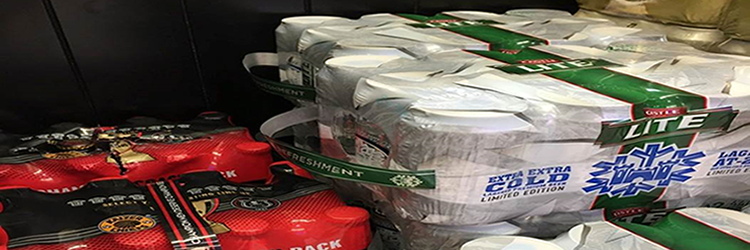
And don’t assume this is only about availability and location. Anything that makes your product easier to buy increases your chances of being bought. A pack that is easier to pick up than the competition. A pack that is easier to carry than the competition. The small carry handle on the case of beer is not going to win any awards at Cannes, but it will probably drive more sales.
2. During. How many products are fiddly to prepare or use? You might not think yours is. But if slicing apples – a product that is not very hard to eat – can make such a difference, you might need to think again. How many products are difficult to eat on the go? Just look at the difference between a sandwich and a wrap. The wrap is much easier to eat with one hand, on the move.
This is just as important for more functional products – e.g. sauces, jars of coffee, detergents, shower gels. You use these products multiple times. Something that is not easy to use on one occasion, becomes something that is not easy to use on another 20, 30, 40 occasions. That cumulative effect can be big. Yesterday I paid twice the amount I needed to for a pack of frozen peas. Better peas? No, a re-sealable pack.
3. After. Washing up used to be an acceptable chore. We didn’t particularly like it, but we did it. Now, even rinsing things before putting them in the dishwasher feels like a chore. Many meal decisions take this into account. Really want a roast dinner? Can you face the cleaning up afterwards?
What about ‘on the go’ products? The last thing you want is something that is messy to eat. For instance, are products like crisps at a longer term disadvantage because they are harder to eat on the move? Because they leave your fingers sticky when you are trying to use your phone or tablet? Things that we didn’t need to worry about in product development – that impact after the usage occasion – we now need to think about carefully.
Making products significantly better is hard. Making them significantly healthier is hard. But making them significantly easier, is well…easier. We all like to spend our time on the big things – the breakthrough innovations. But it is often the little things – the handle on the case of beer – that make the difference.
Be easy or be left on the shelf.
Feel free to forward. Have a great weekend and speak to you next week.